/
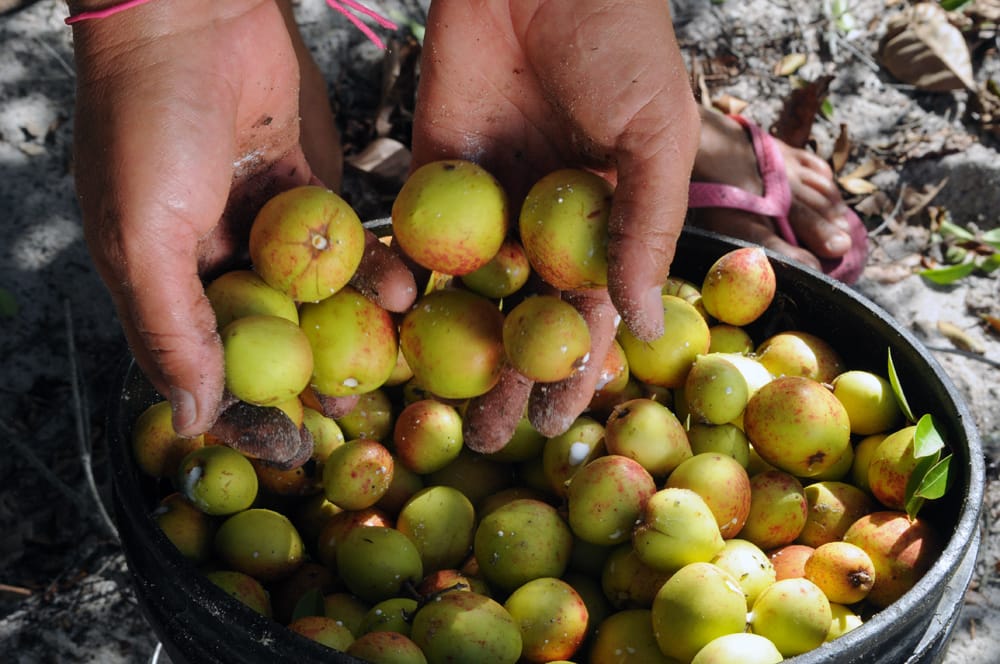
Catadora de mangaba dans l'écosystème de restinga, Sergipe, Brésil

Sergipe, Brésil  ·  Patrimoine Culturel Immatériel 2021 Sergipe, Brazil  ·  Intangible Cultural Heritage 2021

La Technologie
Ancestrale
du Soin
The Ancestral
Technology
of Caring

Dans les écosystèmes de restinga du Sergipe, des femmes noires et autochtones perpétuent depuis des générations un savoir du vivant autour de la mangaba, fruit de la mémoire, de la résistance et de la souveraineté alimentaire. In the restinga ecosystems of Sergipe, Black and Indigenous women have passed down for generations a living knowledge centered on mangaba, the fruit of memory, resistance, and food sovereignty.

Texte : Brenda Helena Barreto Text: Brenda Helena Barreto Édition bilingue FR/EN Bilingual edition FR/EN Hancornia speciosa Gomes  ·  Apocynaceae
Données clés & sources vérifiées Key data & verified sources

Ce que les chiffres
nous disent
What the numbers
tell us

La mangaba est bien plus qu'un fruit : elle est le fondement d'un système socio-écologique complexe, porté par des femmes dont le travail est à la fois invisible et vital pour la biodiversité et la sécurité alimentaire du Brésil. Mangaba is far more than a fruit: it is the foundation of a complex socio-ecological system, carried by women whose work is both invisible and vital to Brazil's biodiversity and food security.

1 700 Familles dépendantes Dependent families

Familles du Sergipe dont le revenu dépend directement de la cueillette de la mangaba.

Families in Sergipe whose income depends directly on mangaba gathering.

Barreto, 2025 · gov.br
80% Arbres disparus Trees lost

Des mangabiers ont disparu en une décennie à cause de l'agrobusiness et de la spéculation immobilière côtière.

Of mangaba trees disappeared in a decade due to agribusiness and coastal real estate speculation.

Barreto, 2025
2021 Patrimoine culturel Cultural heritage

Loi nº 8 918 (12 nov. 2021) : l'Ofício das Catadoras est patrimoine immatériel; la mangaba, patrimoine matériel du Sergipe.

Law no. 8,918 (12 Nov. 2021) declares the Catadoras' craft intangible heritage and the mangaba material heritage of Sergipe.

aleselegis.al.se.leg.br
XVIIe s. Attestation historique Historical record

Voyageurs néerlandais décrivent la mangaba comme l'un des meilleurs fruits du Brésil, aux côtés de l'ananas.

Dutch travelers described mangaba as one of Brazil's finest fruits, alongside pineapple.

Barreto, 2025
#1

Premier producteur

Top producer

Le Sergipe est le premier État producteur de mangaba par l'extrativisme des communautés traditionnelles, selon le gouvernement fédéral brésilien.

Sergipe is Brazil's top mangaba-producing state through extractivism by traditional communities, per the federal government.

5–10 m

Hauteur de la mangabeira

Tree height

La mangabeira atteint 5 à 10 m. Elle produit entre la 3e et la 5e année, avec un potentiel de 10–12 t/ha.

The mangabeira reaches 5 to 10 m. It fruits from year 3 to 5 after planting, up to 10–12 t/ha.

Tupi

Étymologie

Etymology

Mangaba signifie «quelque chose de bon à manger» en tupi-guarani. Un nom qui résume une écologie entière.

Mangaba means "something good to eat" in Tupi-Guarani, a name that encapsulates an entire ecology.

01
Le fruit & l'écosystème The fruit & the ecosystem

Hancornia speciosa :
intelligence écologique

Hancornia speciosa:
ecological intelligence

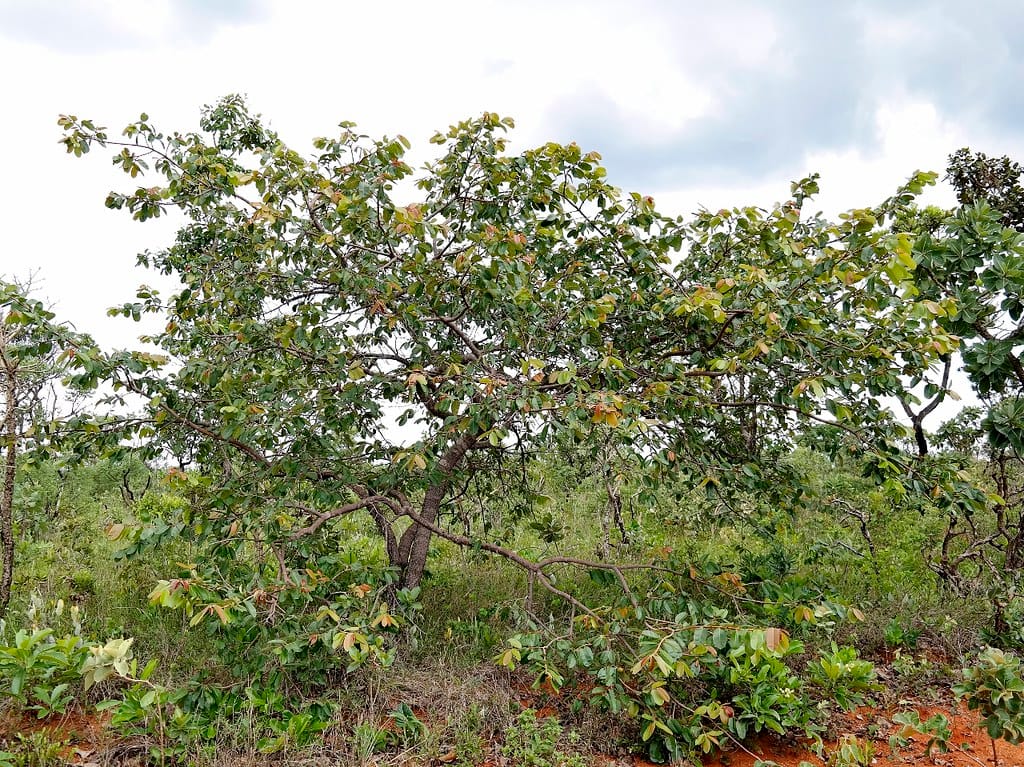
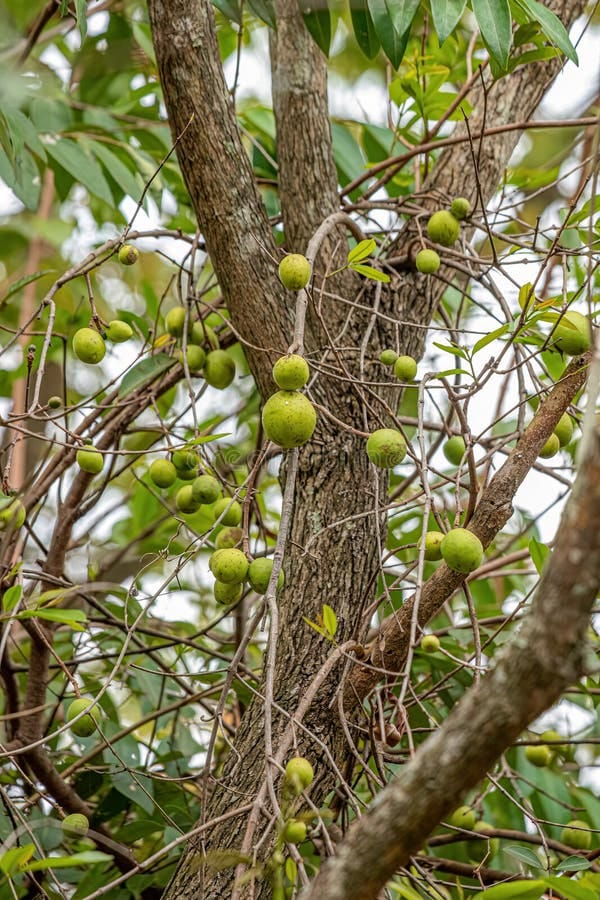
Arbre mangabeira (Hancornia speciosa), Sergipe, Brésil

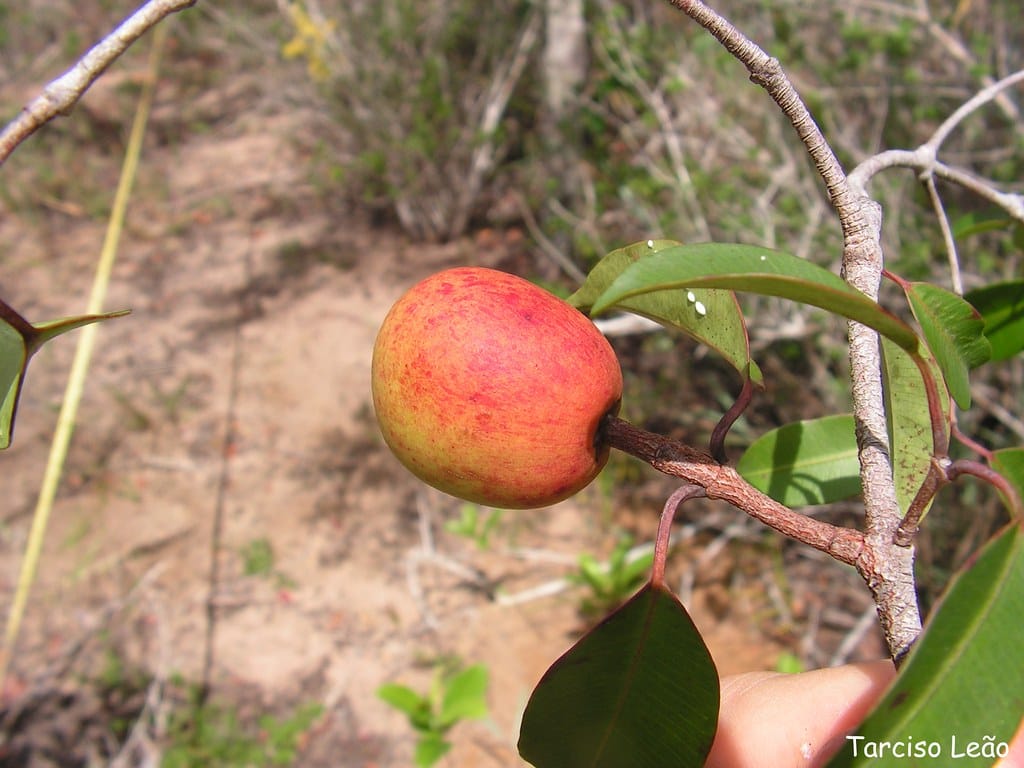
Hancornia speciosa en fruit dans son habitat naturel de restinga. © Flickr / tarcisoleao (CC BY-NC)

Hancornia speciosa fruiting in its natural restinga habitat. © Flickr / tarcisoleao (CC BY-NC)

Native aux écosystèmes de restinga (plaines côtières sablonneuses soumises aux vents forts, à l'exposition saline et à des sols pauvres en nutriments), la mangabeira possède une intelligence écologique façonnée par des millénaires de coévolution. Ses racines stabilisent des terrains fragiles et contribuent à l'équilibre écologique des mangroves, lagunes et plaines inondables.

Native to restinga ecosystems (coastal sandy plains marked by strong winds, salt exposure, and nutrient-poor soils), the mangabeira holds an ecological intelligence shaped by millennia of coevolution. Its roots stabilize fragile terrain and maintain ecological balance across mangroves, lagoons, and floodplains.

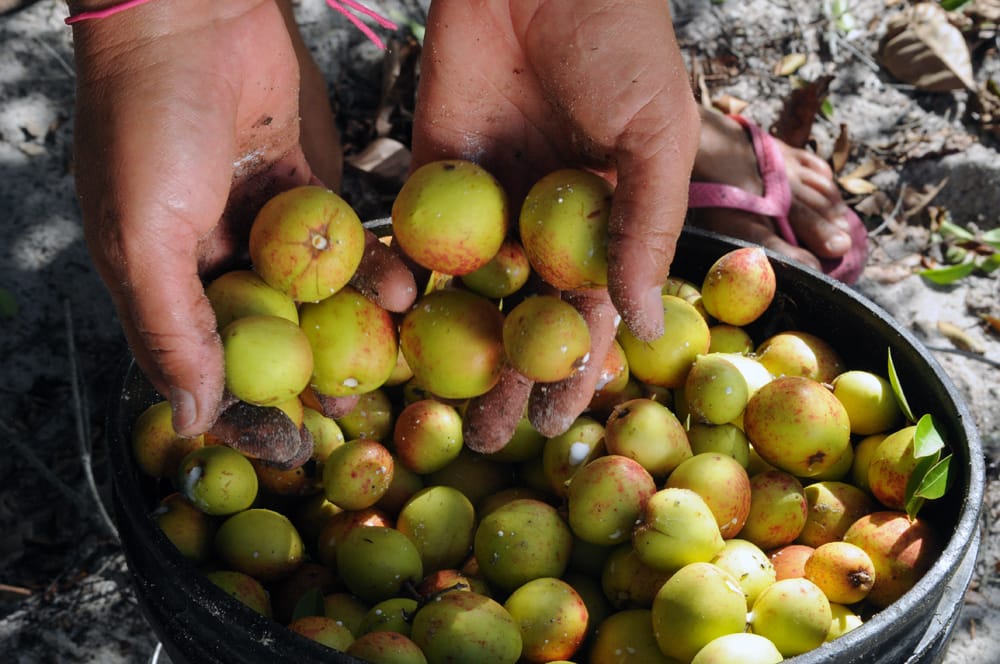
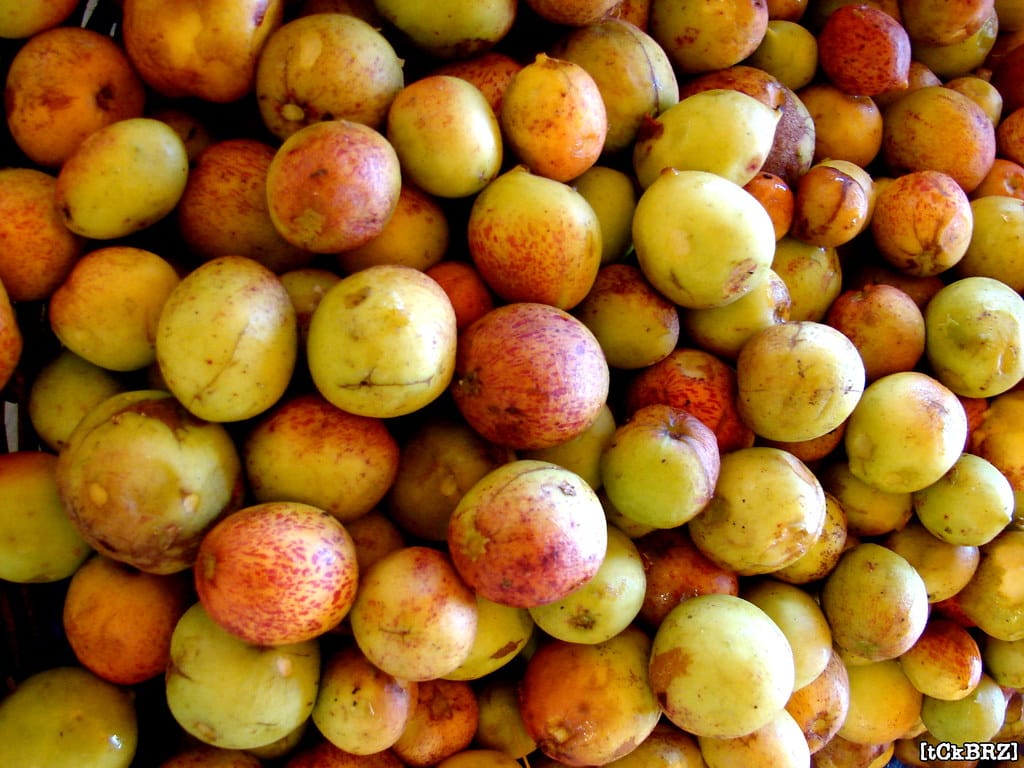
Le fruit est visuellement discret mais sensoriel et inoubliable : une peau fine protège une pulpe blanche et crémeuse, juteuse, légèrement collante, combinant douceur et acidité légère. La mangaba ne peut être consommée que pleinement mûre, idéalement après être tombée naturellement de l'arbre en virant du vert au jaune pâle avec des reflets rougeâtres. Cueillie avant maturité, le latex présent dans le fruit crée une texture caoutchouteuse et peut être toxique.

The fruit is visually modest but sensorially unforgettable: a thin skin protects white, creamy pulp, juicy and slightly sticky, combining sweetness with a gentle sourness. Mangaba can only be consumed when fully ripe, ideally after naturally falling from the tree and shifting from green to pale yellow with reddish tones. Picked prematurely, the latex creates a rubbery texture and may be toxic.


Hancornia speciosa Gomes

Famille Apocynaceae · Décrit par Bernardino António Gomes, 1803

Arbre semi-décidu Semi-deciduous tree 5–10 m Sols sableux acides Acidic sandy soils Tropics · 25°C moy. Tropics · 25°C avg.
Valeur nutritionnelle & médicinale Nutritional & medicinal value

Un fruit aux propriétés remarquables

A fruit of remarkable properties

La mangaba est une source remarquable de vitamine C, de provitamine A, de vitamines B1 et B2, ainsi que de minéraux essentiels : fer, phosphore, calcium. Valorisée pour ses antioxydants, elle entre dans les programmes nationaux d'alimentation scolaire (PNAE) et d'acquisition alimentaire (PAA) du Brésil.

Mangaba is a remarkable source of vitamin C, provitamin A, vitamins B1 and B2, and essential minerals: iron, phosphorus, calcium. Valued for its antioxidants, it features in Brazil's National School Feeding Program (PNAE) and Food Acquisition Program (PAA).

Traditionnellement, son écorce, ses feuilles et ses racines sont utilisées pour traiter les inflammations et l'hypertension artérielle.

Traditionally, its bark, leaves, and roots have been used to treat inflammation and high blood pressure.

  • Vitamine C
  • Vitamin C
  • Provitamine A
  • Provitamin A
  • B1 & B2
  • Fer · Phosphore · Calcium
  • Iron · Phosphorus · Calcium
  • Antioxydants
  • Antioxidants
  • Anti-inflammatoire
  • Anti-inflammatory
Fruits de mangaba mûrs (Hancornia speciosa)

Fruits de mangaba récoltés. © Flickr / tckbrz (CC BY-NC)

Harvested mangaba fruits. © Flickr / tckbrz (CC BY-NC)

Fleurs de la mangabeira (Hancornia speciosa)

Fleurs de la mangabeira (Hancornia speciosa). © Flickr / mercadanteweb (CC BY-NC)

Flowers of the mangabeira (Hancornia speciosa). © Flickr / mercadanteweb (CC BY-NC)

02
Les Catadoras de Mangaba The Catadoras de Mangaba

Récolter la vie,
construire l'autonomie

Harvesting life,
building autonomy

Dans le plus petit État du Brésil, le Sergipe, un réseau de femmes noires et autochtones a fait de la cueillette de la mangaba bien plus qu'une activité économique : un acte politique, culturel et écologique.

In Brazil's smallest state, Sergipe, a network of Black and Indigenous women has made mangaba gathering far more than an economic activity: a political, cultural, and ecological act.

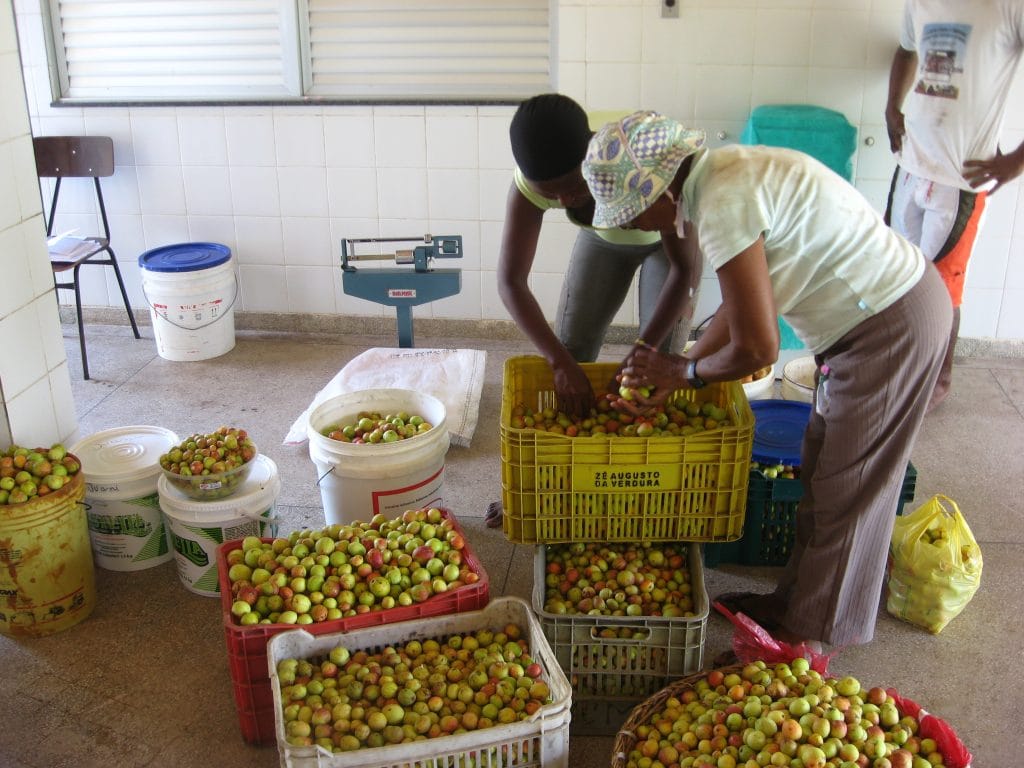
Catadora de mangaba préparant les fruits en atelier communautaire

Transformation artisanale des fruits en atelier communautaire. © Photo : Catadoras de Mangaba

Artisanal processing of mangaba fruits in a community workshop. © Photo: Catadoras de Mangaba

Auto-identifiées comme communauté traditionnelle, les Catadoras entretiennent des liens profonds avec les forêts de restinga. Leur travail part d'une connexion intime avec la terre : lire le sol, reconnaître la maturité, respecter les cycles de pluie et de sécheresse. La récolte exige de longues marches sous une chaleur intense, en se penchant pour ramasser les fruits tombés naturellement.

Self-identified as a traditional community, the Catadoras maintain deep relationships with restinga forests. Their work starts from an intimate connection with the land: reading the soil, recognizing ripeness, respecting the cycles of rain and drought. Harvesting requires long walks under intense heat, bending to collect fruits that have fallen naturally.

Environ 1 700 familles au Sergipe dépendent directement de la cueillette de mangaba. Parce que la récolte est saisonnière, les femmes ont développé des stratégies créatives pour assurer un revenu toute l'année : confitures, glaces, biscuits, gâteaux, truffes, liqueur ; le tout sans conservateurs ni additifs artificiels.

Around 1,700 families in Sergipe depend directly on mangaba gathering. Because harvesting is seasonal, the women have developed creative year-round strategies: jams, ice creams, biscuits, cakes, truffles, liqueur; all without preservatives or artificial additives.

Les femmes décrivent un sentiment de parenté avec les arbres, perçus comme des êtres vivants plutôt que des ressources à exploiter. Pendant la récolte, chants et danses accompagnent le travail, mêlant poésie, humour, spiritualité et solidarité : un rituel de célébration et d'héritage.

The women describe a sense of kinship with the trees, perceived as living relatives rather than resources to be exploited. During harvesting, singing and dancing accompany the work, blending poetry, humor, spirituality, and solidarity: a ritual of celebration and heritage.
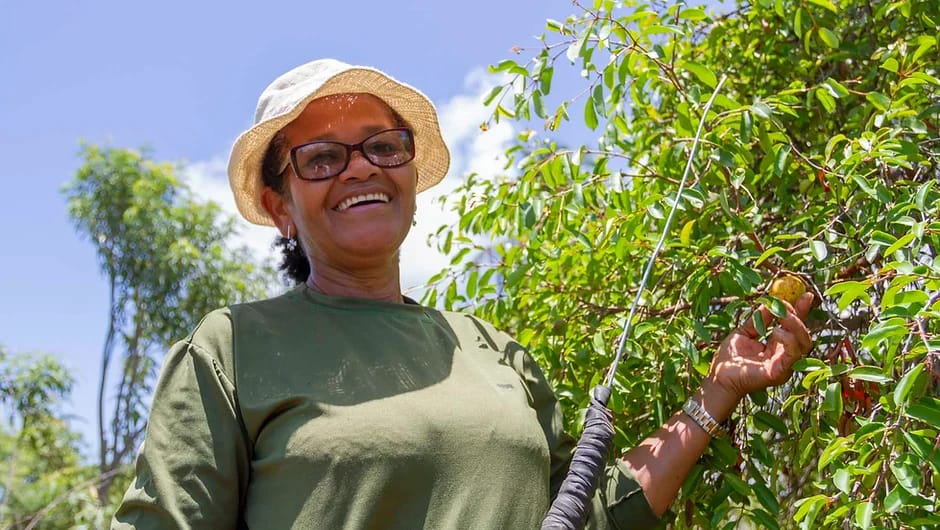
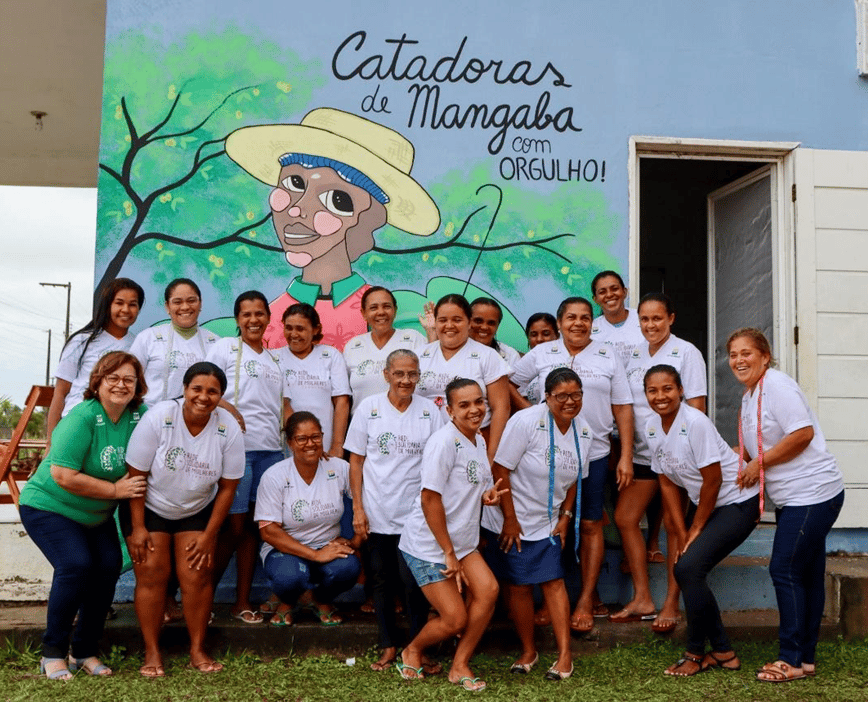
Fresque murale Catadoras de Mangaba, Sergipe
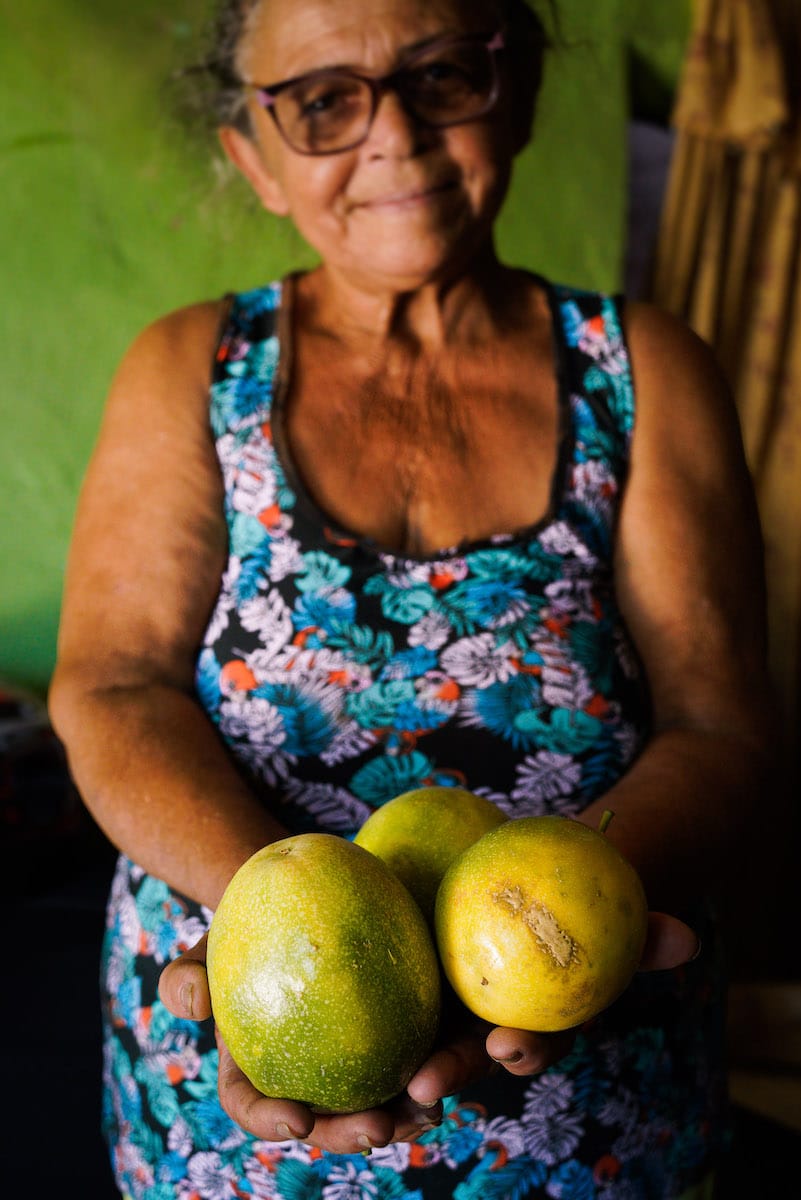
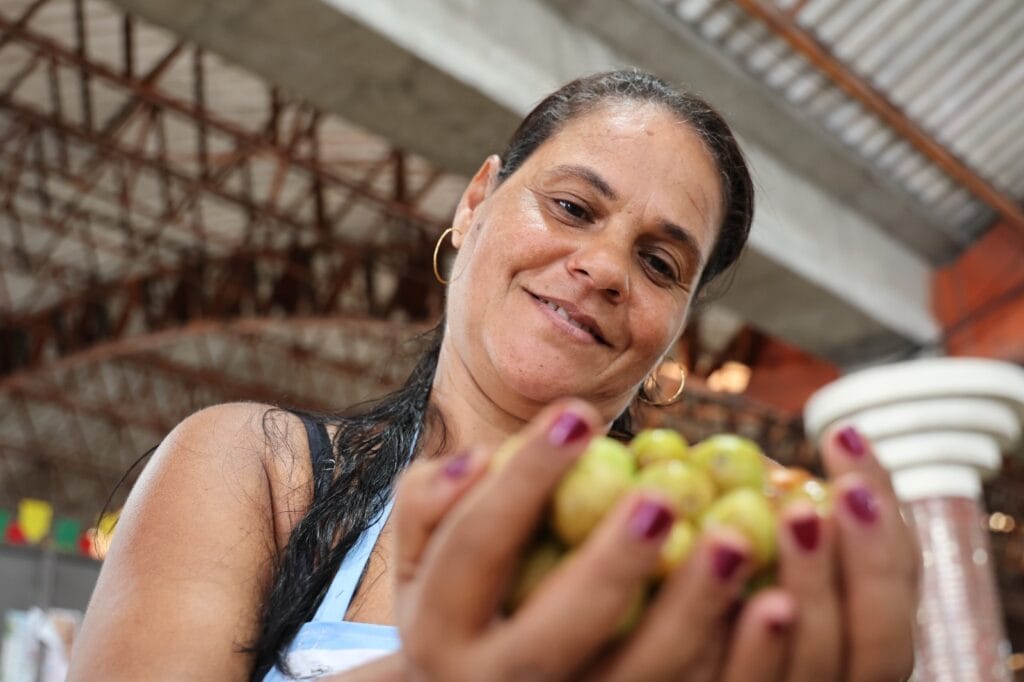
Mains tenant des fruits de mangaba
Récolte de mangaba
Femmes en communauté, Brésil
Mangabeira en restinga

Crédits : Photos Catadoras de Mangaba / Universidade Tiradentes (UNIT) / Flickr CC BY-NC Credits: Catadoras de Mangaba / Universidade Tiradentes (UNIT) / Flickr CC BY-NC

"La nature prend soin des humains, tout comme les humains prennent soin de la nature."

"Nature cares for humans just as humans care for nature."


Les Catadoras de Mangaba Sergipe, Brésil · Cosmovision ancestrale The Catadoras de Mangaba Sergipe, Brazil · Ancestral worldview
03
Menaces & résistance Threats & resistance

Reboiser les esprits,
ancrer la mémoire

Reforesting minds,
rooting memory

En une décennie, près de 80% des mangabiers ont disparu sous l'effet de la destruction environnementale et de la spéculation immobilière portée par l'agrobusiness et le développement côtier. Ces transformations menacent non seulement la biodiversité, mais aussi la continuité culturelle des communautés gardiennes.

In a decade, nearly 80% of mangaba trees have disappeared due to environmental destruction and real estate speculation driven by agribusiness and coastal development. These transformations endanger not only biodiversity but also the cultural continuity of the guardian communities.

Le territoire porte des couches de mémoire historique. Beaucoup de zones de récolte chevauchent des régions quilombolas, terres qui servirent de refuges aux Africains réduits en esclavage et aux peuples autochtones. Leurs descendants habitent cette lignée comme source de fierté et d'identité. Dans ce contexte, le mot quilombo devient verbe : une façon de vivre dans laquelle la communauté guide les rythmes de l'existence.

The territory holds layers of historical memory. Many harvesting areas overlap with quilombola regions, lands that served as refuges for enslaved Africans and Indigenous peoples. Their descendants embrace this lineage as a source of pride and identity. In this context, the word quilombo becomes a verb: a way of living in which community guides the rhythms of existence.


Des collaborations avec l'Université Fédérale de Sergipe (UFS) ont soutenu des initiatives de reforestation par la production de plants, réintroduisant la mangabeira aux côtés d'autres espèces natives. En reforestant la terre, ces initiatives reforestent aussi les esprits.

Collaborations with the Federal University of Sergipe (UFS) have supported reforestation through seedling production, reintroducing the mangabeira alongside other native species. By reforesting the land, these efforts also reforest the mindset.

Chronologie des menaces et réponses

Timeline of threats and responses

  1. 2000–2010 2000–2010

    Expansion de l'agrobusiness et urbanisation côtière effacent de vastes zones de restinga.

    Agribusiness expansion and coastal urbanization erase vast restinga zones.

  2. 2010

    Loi étatique nº 288/2010 : les catadoras reconnues comme groupe culturellement différencié.

    State law no. 288/2010 recognizes the Catadoras as a culturally differentiated group.

  3. 2017–2018

    Le Ministère de l'Environnement accorde un Terme de Droit d'Usage aux catadoras du littoral sud du Sergipe.

    The Ministry of Environment grants a Right-of-Use Term to Catadoras on Sergipe's southern coast.

  4. 2021

    Loi nº 8 918 : double reconnaissance, patrimoine immatériel (Ofício) et matériel (mangaba).

    Law no. 8,918: dual recognition, intangible heritage (Craft) and material heritage (fruit).

  5. En cours Ongoing

    Partenariats UFS + Catadoras pour la reforestation; intégration aux programmes nationaux PNAE/PAA.

    UFS + Catadoras partnerships for reforestation; integration into PNAE/PAA national food programs.

Catadora de mangaba dans les restingas du Sergipe

Dans les restingas du Sergipe, territoires ancestraux des Catadoras de Mangaba. © Universidade Tiradentes (UNIT)

In the restingas of Sergipe, ancestral territories of the Catadoras de Mangaba. © Universidade Tiradentes (UNIT)

Applications & Enseignements Applications & Lessons

Ce que le modèle
des Catadoras nous apprend

What the Catadoras
model teaches us

Du point de vue des sciences sociales, de l'anthropologie et de l'économie politique, l'expérience des Catadoras de Mangaba constitue un cas d'étude exceptionnel pour repenser les modèles de gouvernance des communs, d'autonomisation des femmes et de durabilité.

From the perspective of social sciences, anthropology, and political economy, the experience of the Catadoras de Mangaba is an exceptional case study for rethinking models of commons governance, women's empowerment, and sustainability.

🌿

Gouvernance des communs

Commons governance

Les catadoras illustrent la thèse d'Elinor Ostrom sur la gouvernance des biens communs par les communautés locales, sans privatisation ni étatisation. L'accès aux arbres sur terres communes, privées ou «de meias» témoigne d'une régulation collective sophistiquée.

The Catadoras illustrate Elinor Ostrom's thesis on commons governance by local communities, without privatization or state control. Access to trees on common, private, or sharecropped land reflects sophisticated collective regulation.

💪

Autonomie économique féminine

Female economic autonomy

La cueillette a permis à d'innombrables femmes d'atteindre l'indépendance financière, même dans des contextes ruraux conservateurs. Beaucoup témoignent avoir affronté résistances et manque de soutien de la part de leurs partenaires ; la mangaba a pourtant transformé des vies.

Gathering has enabled countless women to achieve financial independence, even in conservative rural contexts. Many report facing resistance and lack of support from partners; yet mangaba has transformed lives.

🏺

Identité territoriale & quilombola

Territorial & quilombola identity

Les zones de récolte recoupent souvent des territoires quilombolas, ces espaces de résistance des Africains réduits en esclavage. La cueillette est ainsi un acte de mémoire anti-coloniale et de (re)conquête de la dignité, où quilombo devient verbe.

Harvesting areas often overlap with quilombola territories, spaces of resistance for enslaved Africans. Gathering is thus an act of anti-colonial memory and reconquest of dignity, where quilombo becomes a verb.

📚

Épistémologie du vivant

Epistemology of the living

La cueillette est une façon de connaître façonnée par l'observation, la réciprocité et le soin collectif. Elle constitue une épistémologie alternative aux savoirs extractivistes dominants, ancrée dans l'attention tactile au sol et aux cycles naturels.

Gathering is a way of knowing shaped by observation, reciprocity, and collective care: an alternative epistemology to dominant extractivist knowledge, grounded in tactile attention to soil and natural cycles.

🔗

Réseaux féminins de savoir écologique

Female ecological knowledge networks

Des études ethnobotaniques (da Costa et al., PLOS ONE, 2021) montrent que les femmes forment des réseaux de connaissance écologique plus denses et homogènes que les hommes, assurant la résilience des savoirs communautaires.

Ethnobotanical studies (da Costa et al., PLOS ONE, 2021) show that women form denser, more homogeneous ecological knowledge networks than men, ensuring the resilience of community knowledge.

🌾

Souveraineté alimentaire

Food sovereignty

La mangaba entre dans les programmes nationaux PNAE et PAA, nourrissant des enfants d'écoles publiques tout en soutenant les économies locales. La faim ne peut pas attendre : les catadoras le savent depuis des générations.

Mangaba features in the national PNAE and PAA programs, feeding public school children while supporting local economies. Hunger cannot wait: the Catadoras have understood this for generations.

Lecture anthropologique approfondie Deeper anthropological reading

Vers une anthropologie des sociétés matrifocales et de l'écologie du soin

Towards an anthropology of matrifocal societies and the ecology of care

La structure sociale des communautés de catadoras présente des traits de matrifocalité, terme introduit par Raymond T. Smith (1956) pour désigner des systèmes familiaux où les femmes occupent une position centrale non seulement dans l'organisation domestique, mais aussi dans la constitution de l'identité culturelle et de la cohésion sociale. Dans la sociologie brésilienne, cette notion a été reprise pour analyser les familles noires des périphéries, où les femmes sont à la fois pourvoyeuses et garantes de la continuité culturelle.

The social structure of Catadora communities exhibits traits of matrifocality, a term introduced by Raymond T. Smith (1956) to describe family systems in which women occupy a central position not only in domestic organization, but also in the constitution of cultural identity and social cohesion. In Brazilian sociology, this concept has been applied to Black families in peripheral communities, where women are simultaneously providers and guarantors of cultural continuity.

Pour Heide Goettner-Abendroth, chercheuse pionnière en études matriarcales, les sociétés matriarcales ne sont pas l'inverse des patriarcats, mais des systèmes fondés sur la réciprocité, la maternité sociale et le soin comme valeur structurante. La gestion des mangabiers par les catadoras, avec ses règles de non-appropriation individuelle, de partage de l'espace et de transmission intergénérationnelle, s'inscrit pleinement dans cette logique.

For Heide Goettner-Abendroth, a pioneering researcher in matriarchal studies, matriarchal societies are not the reverse of patriarchies, but systems founded on reciprocity, social motherhood, and care as a structuring value. The management of mangaba trees by the Catadoras, with its rules of non-individual appropriation, space-sharing, and intergenerational transmission, fits squarely within this logic.

Le concept de territoire-corps (Prates, Medical Anthropology Quarterly, 2025) offre une lecture supplémentaire : chez les femmes autochtones et noires du Brésil, le corps et le territoire sont indissociables. La défense du mangabier est aussi la défense de l'intégrité corporelle, reproductive et mémorielle des femmes. Cette convergence entre écologie et féminisme s'appelle l'écoféminisme décolonial.

The concept of body-territory (Prates, Medical Anthropology Quarterly, 2025) offers an additional reading: for Indigenous and Black women in Brazil, body and territory are inseparable. The defense of the mangaba tree is also the defense of women's bodily, reproductive, and memorial integrity. This convergence of ecology and feminism is called decolonial ecofeminism.

Des études ethnobotaniques de genre (Cantelli et al., Journal of Ethnobiology and Ethnomedicine, 2024 ; da Costa et al., PLOS ONE, 2021) confirment que les femmes des communautés quilombolas et traditionnelles brésiliennes possèdent des réseaux de savoirs écologiques plus denses, plus homogènes et plus interconnectés que ceux des hommes, ce qui en fait des actrices irremplaçables de la conservation de la biodiversité.

Gender-based ethnobotanical studies (Cantelli et al., Journal of Ethnobiology and Ethnomedicine, 2024; da Costa et al., PLOS ONE, 2021) confirm that women in Brazilian quilombola and traditional communities possess denser, more homogeneous, and more interconnected ecological knowledge networks than men, making them irreplaceable actors in biodiversity conservation.

Pour aller plus loin : Goettner-Abendroth, H. Matriarchal Societies (Peter Lang, 2012). Herlihy, L.H. Matrifocality and Women's Power on the Miskito Coast (2008). Fonseca, M.F.B. O lugar de fala dos catadores de mangaba, UFS, 2022.

Further reading: Goettner-Abendroth, H. Matriarchal Societies (Peter Lang, 2012). Herlihy, L.H. Matrifocality and Women's Power on the Miskito Coast (2008). Fonseca, M.F.B. O lugar de fala dos catadores de mangaba, UFS, 2022.

Guide pratico-pratique Hands-on guide

Cultiver la mangabeira
dans son jardin

Growing mangabeira
in your garden

Basé sur les recommandations techniques officielles d'Embrapa (Institut brésilien de recherche agricole, Document nº 20), voici 8 conseils concrets pour tout jardinier souhaitant cultiver cet arbre remarquable.

Based on official technical recommendations from Embrapa (Brazilian Agricultural Research Corporation, Document no. 20), here are 8 concrete tips for any gardener wishing to grow this remarkable tree.

  1. Climat tropical requis Tropical climate required

    Fort ensoleillement, température moyenne de 25°C, précipitations de 750 à 1 500 mm/an. Tolère la sécheresse une fois établi. Sensible au gel.

    Strong sunlight, mean temperature around 25°C, rainfall 750–1,500 mm/year. Tolerates drought once established. Sensitive to frost.

  2. Sol sableux, acide, bien drainé Sandy, acidic, well-drained soil

    Podzols, latosols ou sables quartzeux, acides, bien drainés. Évitez les argiles : l'arbre ne supporte pas l'engorgement. Nappe phréatique à au moins 3 m.

    Podzols, latosols, or quartzite sands, acidic and well-drained. Avoid clay soils: the tree cannot tolerate waterlogging. Water table at least 3 m deep.

  3. Semence fraîche, sous 4 jours Fresh seed only: within 4 days

    Graines récalcitrantes : perdent leur pouvoir germinatif très vite. Extrayez, lavez, séchez à l'ombre 12–24h, semez sous 4 jours dans un substrat sableux sans fumier.

    Recalcitrant seeds: lose germination viability rapidly. Extract, wash, air-dry 12–24 h, sow within 4 days in sandy substrate without manure.

  4. Arrosage des jeunes plants Watering young plants

    3 à 4 litres par plant tous les 5 jours en période sèche. Les plants de plus de 60 cm résistent mieux à la sécheresse. L'adulte n'a pas besoin d'irrigation.

    3–4 litres per plant every 5 days during dry periods. Plants over 60 cm become more drought-tolerant. Mature trees need no irrigation.

  1. Espacement recommandé Recommended spacing

    6 m × 6 m (278 arbres/ha) ou 6 m × 7 m (238 arbres/ha). Pour un jardin domestique, comptez 9–12 m² libres par arbre adulte.

    6 m × 6 m (278 trees/ha) or 6 m × 7 m (238 trees/ha). For a home garden, allow 9–12 m² free space per mature tree.

  2. Taille de formation Formative pruning

    Entre 8 et 12 mois, éliminez les branches basses jusqu'à 40–50 cm du sol. À 1,5 m, pincez le bourgeon apical pour stimuler les rameaux latéraux.

    Between 8 and 12 months, remove lower branches to 40–50 cm from the ground. At 1.5 m, tip-prune the apical bud to stimulate lateral branches.

  3. Patience : 3 à 5 ans Patience: 3 to 5 years

    La production commence entre la 3e et la 5e année. Jusqu'à 10–12 t/ha en régime adulte. Un investissement de long terme, fidèle à la philosophie des catadoras.

    Production begins between year 3 and 5. Up to 10–12 t/ha at full maturity. A long-term investment, true to the Catadoras' philosophy.

  4. Récolte au sol, deux fois par jour Harvest from the ground, twice daily

    Ne cueillez jamais le fruit sur l'arbre. La mangaba tombe naturellement à maturité. Ramassez deux fois par jour pour éviter la fermentation. Un fruit mûr est souple, jaune pâle à reflets rougeâtres. Fruit vert = toxique.

    Never pick fruit from the tree. Mangaba falls naturally when ripe. Collect twice daily to prevent fermentation. A ripe fruit is soft, pale yellow with reddish hints. Green fruit = toxic.

Source Embrapa : Recomendações Técnicas para o Cultivo da Mangabeira (Doc. nº 20) & Sistema de Produção de Mangaba para o Nordeste. infoteca.cnptia.embrapa.br Embrapa source: Technical Recommendations for Mangabeira Cultivation (Doc. no. 20) & Production System for Northeast Brazil. infoteca.cnptia.embrapa.br

Plantation de mangabeiras, Sergipe, Brésil

Plantation de mangabeiras, pratiques de reforestation au Sergipe.

Mangabeira plantation, reforestation practices in Sergipe.

À propos de l'autrice About the author
Brenda Helena Barreto, autrice

Brenda Helena Barreto

Autrice · Chercheuse indépendante

Author · Independent Researcher

Brenda Helena Barreto est l'autrice de l'article original "The Ancestral Technology of Caring in the Craft of Mangaba Women", dont la présente page est une adaptation longform bilingue. Son travail documente les pratiques ancestrales des Catadoras de Mangaba du Sergipe, leur rôle dans la préservation de l'écosystème de restinga et leur contribution à la souveraineté alimentaire du Brésil.

Brenda Helena Barreto is the author of the original article "The Ancestral Technology of Caring in the Craft of Mangaba Women", of which this page is a bilingual long-form adaptation. Her work documents the ancestral practices of Sergipe's Catadoras de Mangaba, their role in preserving the restinga ecosystem, and their contribution to Brazil's food sovereignty.

Cette étude de cas illustre comment des communautés de femmes noires et autochtones portent, au quotidien, des modèles de durabilité et de réciprocité qui devraient inspirer les politiques environnementales et sociales contemporaines.

This case study illustrates how communities of Black and Indigenous women carry, daily, models of sustainability and reciprocity that should inspire contemporary environmental and social policy.

Bibliographie References

Sources & références

Sources & references